
THE ORIGINS
1925–1926
It all began with an idea from Piero Pirelli, then president of Milan: to give the team its very own ground, designed in the English-style, without an athletics track. The foundation stone was laid on 1 August 1925, on a plot of land next to the racecourse. The project was designed by engineer Alberto Cugini and architect Ulisse Stacchini — the same architect who designed Milano Central Station. Construction progressed rapidly: 120 workers, 13 months of work. On 15 September 1926, the keys to the stadium were handed over to the director, Anteo Carapezzi, who chose the name San Siro in honour of a small church in the neighbourhood.

THE FIRST SAN SIRO
THE NEW STADIUM
35,000
Capacity
26,000 seats, four stands (one on each side), only one of which is covered
THE COST
₤ 5
million
An investment funded entirely by Piero Pirelli
THE WORKS
120
workers
Work began on 1 August 1925 and was completed in September 1926
THE OPENING CEREMONY
19 SEPTEMBER 1926
In the presence of the Duke of Bergamo, Inter and Milan took to the pitch for the first match in San Siro’s history. The Nerazzurri won the derby 6–3. The very first goal ever scored at San Siro was netted by Milan’s Giuseppe Santagostino, whilst Inter’s first goal was scored by Antonio Powolny.
MILAN-INTER 3-6
Goals: 11’ Santagostino, 15’ Powolny, 24’ Bernardini, 35’ Cevenini III, 36’ and 56’ A. Castellazzi, 62’ Conti, 78’ Savelli, 89’ Ostromann II
Milan: Carmignato, Barzan, Schienoni, De Franceschini I, Hajos, Pomi (Marchi), Ballarin (Radice), Santagostino, Ostromann II, Savelli, Pasqualetto.
Manager: Burgess .
Inter: Zamberletti , D. Bellini, Gianfardoni, Pietroboni, Giustacchini, Agradi, Conti, Cevenini III, Bernardini, Powolny, A. Castellazzi.
Manager: Weisz .
The following day, 20 September 1926, another match was played at San Siro: a team comprising eight Inter players and three from Milan took on D.F.C. Prague, winning by a clear margin.

Yesterday, in the late afternoon, Milan’s new football pitch was inaugurated. The official ceremony was presided over by the Duke of Bergamo, who, following the ‘attention’ bugle calls and to the sound of the royal march, cut the tricolour ribbon stretched across the entrance to the pitch. Numerous civil, military and sporting dignitaries were present in the VIP box; the stands and terraces were filled with spectators, though not enough to do justice to the vastness of the venue.”
Corriere della Sera, 20 September 1926
THE WORLD CUP
1934
In 1934, San Siro hosted World Cup matches for the first time. The Milanese stadium was the venue for three matches, including the semi-final won by Italy against Austria, decided by a goal from Guaita.
The Azzurri went on to be crowned world champions by beating Czechoslovakia in the final. The other matches played at San Siro were the round of 16 tie between Switzerland and the Netherlands and the quarter-final between Germany and Sweden.
The match between Italy and Austria was a sell-out.
Match takings: 811,526 lire


THE EXTENSION WORKS
1937–1939
By a resolution dated 10 September 1937, Milano City Council purchased the stadium and set about completing it. The work was entrusted to the Municipal Technical Office, under the supervision of engineer Giuseppe Bertera and architect Mario Perlasca: the aim was to construct a single ring of stands, all of the same height, forming a continuous loop around the pitch with no further breaks between the sections. Work proceeded at a rapid pace — 1,018 workers, round the clock — and was completed in 1939: the capacity rose to 55,000 spectators. On 13 May 1939, the refurbished stadium hosted its first match, a friendly between Italy and England.
THE RENOVATED SAN SIRO
AFTER THE WORKS
65,000
Capacity
43,000 standing places and nearly 22,000 seated places
THE SPACES
2
car parks
Two 25,000-square-metre forecourts are the real new feature outside the facility
THE FRIENDLY MATCH
13 May
1939
Italy v England marks the opening of the refurbished stadium. The match will end 2–2 (Biavati and Piola)
INTER AT SAN SIRO
THE 1940s
President Pozzani wanted to celebrate the club’s fifth Scudetto, won in the 1939/40 season, in front of as many supporters as possible: Inter v Bologna, the final league match, was played at San Siro on 2 June 1940. From that point onwards, the Nerazzurri played a number of high-profile matches at the stadium until the 1947/48 season, the first in which Inter moved permanently to San Siro.


THE SECOND RING
1954–1955
In 1954, San Siro underwent another major transformation with the construction of the second tier: a project designed to significantly alter its appearance and dimensions. The project was entrusted to engineer Ferruccio Calzolari and architect Armando Ronca, who worked on the construction of a new structure superimposed on the first tier, consisting of 29 rows of steps.
The works took around 500 days to complete and were finished in 1955, with a total investment of 750 million lire. The extension enabled San Siro to significantly increase its capacity, bringing it to 100,000 spectators: 60,000 in the first tier and 40,000 in the new second tier. An extraordinary figure for the time, making the Milanese stadium one of the largest and most impressive sports venues in Europe.
For safety reasons, the capacity will subsequently be set at 85,000 spectators, but the new layout marks a turning point in the history of San Siro. The second tier expands the stands and brings the stadium even closer to its status as a great theatre of football, making it one of the symbols of the city of Milano.
Added to this, two years later, was the floodlighting system, inaugurated in 1957: two hundred floodlights, each equipping with 1,500-watt incandescent bulbs, mounted on 13-metre-high masts, to open the stadium’s doors to evening matches on European nights.
Yesterday, the people of Milano were introduced to the new, vast stadium, which can hold 90,000–100,000 people. The vast arena appeared in all its grandeur. It must certainly be said that it is beautiful, functional and comfortable. There may have been some doubts about visibility from the highest points of the stands, but even these were dispelled when put to the test: visibility is perfect. It was also evident that the evacuation process is swift and orderly; within a few minutes, the crowd was able to leave the stands without any jostling, forced stops or bottlenecks. Milano now has the sporting venue it deserved.
Corriere della Sera, 5 September 1955
THE NEW SAN SIRO
AFTER THE WORKS
100,000
Capacity
60,000 seats in the first tier, 40,000 in the second: capacity will be reduced to 85,000 for safety reasons
THE COST
₤750
million
Funds allocated for the construction of the second ring road.
THE WEATHER
500
working days
Just over a year to complete the stadium extension works.
INTER, EUROPEAN CHAMPIONS, AT SAN SIRO
27 May 1965
A year after Vienna’s Prater, the venue for Inter’s first European title, the Nerazzurri were back in the European Cup final. The final was to be played in Milano, with San Siro chosen for the first time to host the final of Europe’s premier competition: one of the moments when the Milanese stadium definitively established itself as one of the greatest and most iconic in the world of football. Herrera’s Inter were crowned European champions for the second time, beating Benfica 1–0 thanks to a goal from Jair in torrential rain at San Siro, thereby winning their second consecutive European Cup.


“We’re getting used to winning all the time now, so this time it just seemed more normal to us”
Helenio Herrera
THE NAMING IN HONOUR OF GIUSEPPE MEAZZA
2 March 1980
On 2 March 1980, the San Siro stadium was named after Giuseppe Meazza, who had passed away the previous year. A tribute to one of the greatest Italian footballers of all time, a star for both Inter and the national team, and a two-time World Cup winner with the Azzurri. Born in Milano in 1910, Meazza had inextricably linked his name to the stadium, which had become his footballing home over the years. The match chosen to inaugurate the Giuseppe Meazza Stadium was the Milano derby between Milan and Inter on 2 March 1980, which ended 0–1 in favour of the Nerazzurri thanks to a goal from Oriali.


SAN SIRO THROUGH THE YEARS
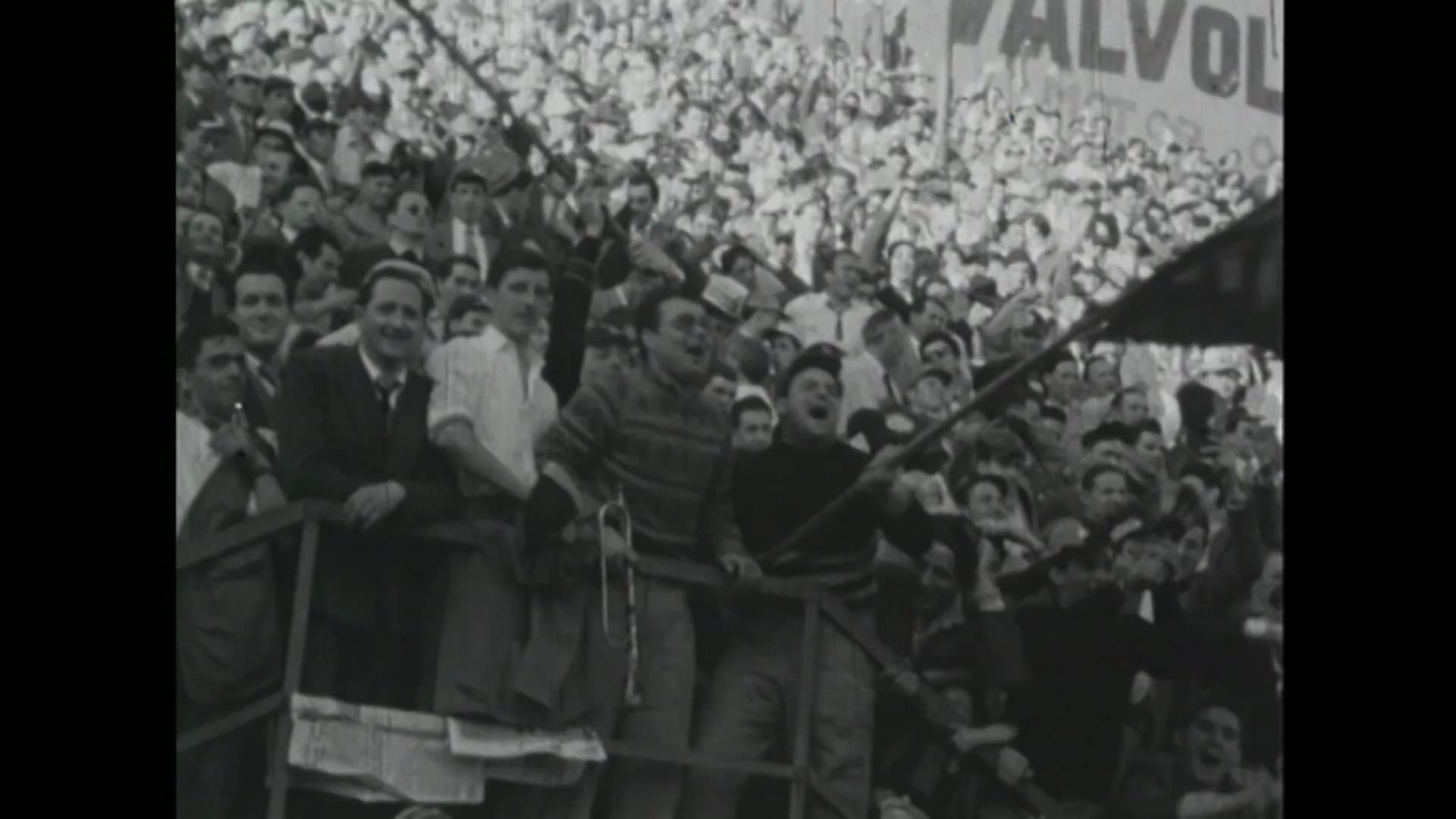
THE 1950s
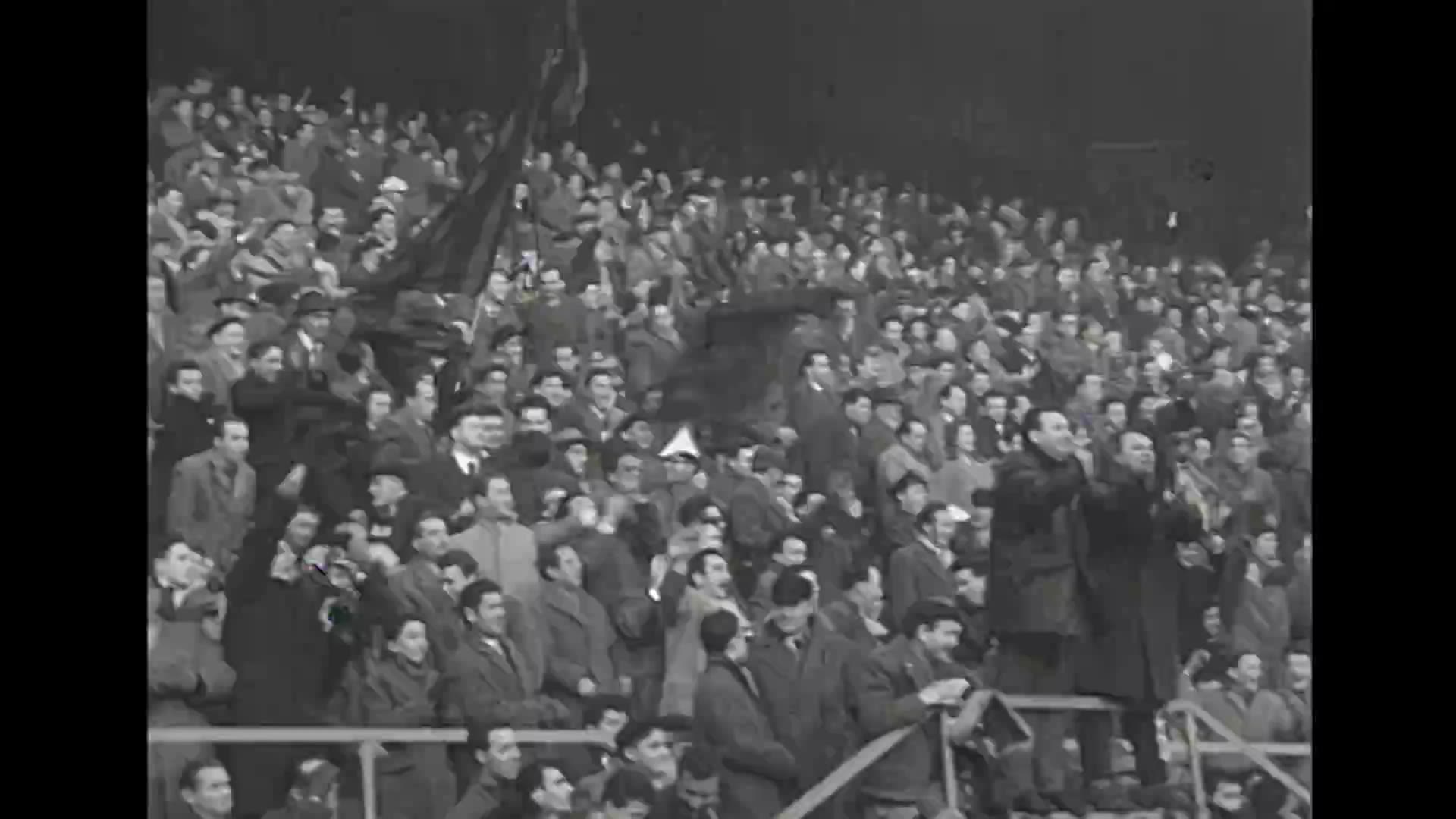
THE 1960s
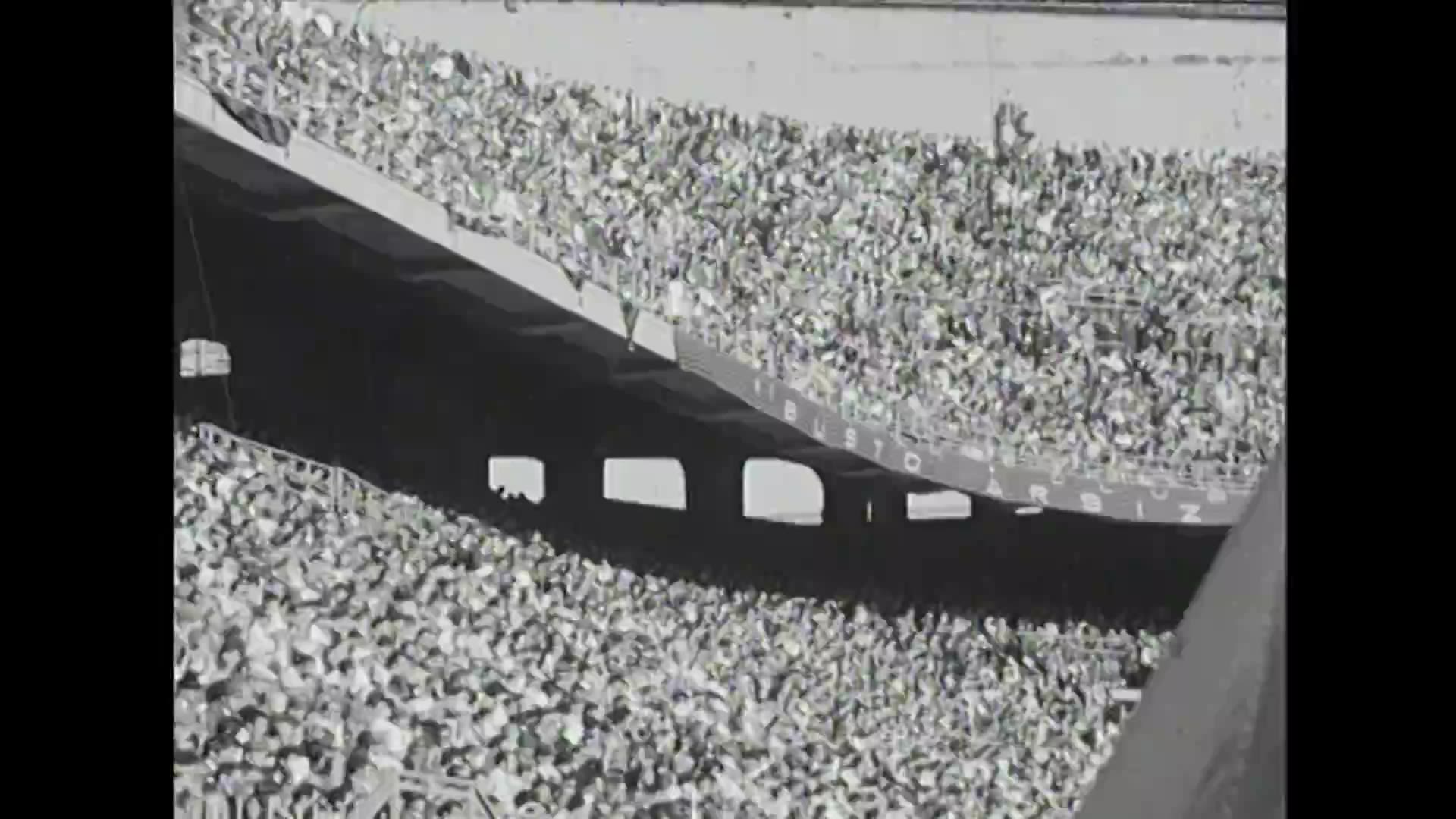
THE 1970s
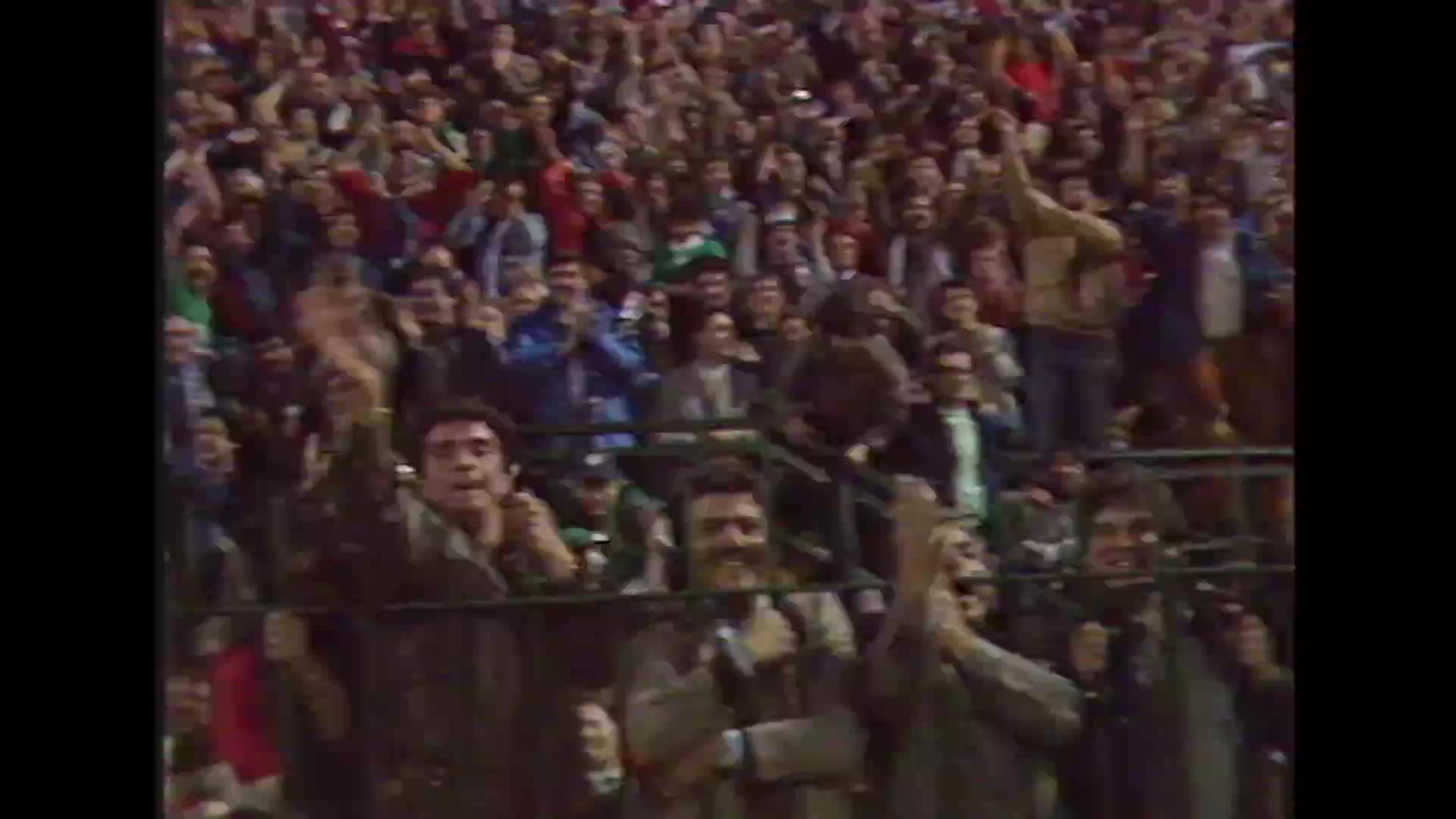
THE 1980s


THE THIRD RING
1987–1990
In the run-up to the 1990 World Cup in Italy, San Siro underwent further renovation, gradually taking on the appearance we recognise today: between 1987 and 1990, the third tier was built, completing the stadium’s three-tiered structure. The project, designed by architects Giancarlo Ragazzi and Enrico Hoffer in collaboration with engineer Leo Finzi, increased the capacity to over 85,000 spectators and gave the Meazza a new, imposing appearance. Inter won the ‘Scudetto dei Record’ in 1989 whilst the stadium was still under construction, providing particularly striking images with the building site serving as a backdrop to the Nerazzurri’s celebrations.
SAN SIRO FOR ITALY '90
WITH THE THIRD RING
85,700
Capacity
The refurbishment was driven by FIFA regulations requiring stadiums to have seating only
IMPRESSIVE
11
towers
Also serving as an external spiral staircase, the four corner pillars also support the roof, which is constructed from a steel truss framework
THE NEW SECTORS
3
coloured rings
Since 1990, sectors have been classified by colour: Red, Orange, Green and Blue
THE 1990 WORLD CUP IN ITALY
1990
A few months later, the stadium was one of the main venues for the World Cup. San Siro hosted the opening ceremony and the opening match between Argentina and Cameroon, as well as four group stage matches and the round of 16. It was the first major international event at the refurbished Meazza, destined to become one of the symbols of Italia ’90. It was the World Cup won by the German Inter players Matthäus, Klinsmann and Brehme. The goals in the round of 16 against the Netherlands – scored by Van Basten, Gullit and Rijkaard – right beneath the Curva Nord were truly historic.


THE CHAMPIONS LEAGUE FINALS
2001–2016
In the new millennium, San Siro hosted the Champions League final on two occasions, maintaining its status as an iconic stadium of international standing and the ideal venue for the most prestigious events in world football. Thirty-one years after the final between Feyenoord and Celtic, the final of Europe’s premier competition returned to San Siro in 2001. The match between Valencia and Bayern Munich was won by the Germans, whilst in 2016 the final featured the Madrid derby between Atlético and Real, with the Blancos emerging as champions . Both matches were decided on penalties.


THE NERAZZURRI SUNRISE AT SAN SIRO
2010
The sweetest dawn, the one we’d been waiting for the longest. When Webb blew the final whistle at the Bernabéu on the evening of 22 May 2010, he tied a Nerazzurri thread stretching from Madrid to Milano, filled with boundless joy. The joy of the Inter fans present in Spain, that of the thousands who filled Piazza del Duomo, and that of the team, which, after the celebrations on the Bernabéu pitch, was ready to return to Italy.
“They’re bringing us the Cup.” Dreamed of for years, still just a few hours away: from the Duomo to San Siro, a festive procession filling the stadium stands at night, whilst awaiting the flight from Madrid to Malpensa. Everyone dressed up for the occasion, as if for the most important match, with giant screens displaying triumphant images, music and chants, and the floodlights blazing. A few weary eyes, until the announcement came, around 4 am: the team had left Madrid. As Marco Materazzi told us, the delay was also caused by Goran Pandev’s ‘slowness’ during the post-match anti-doping procedure.
The flight from Madrid to Milano, with the Champions League in the air, was one of the most joyful moments of the players’ careers. And at San Siro, an eager crowd gathered to await their triumphant arrival at around 6 am.
From Zanetti to Milito, all the key figures behind the Treble emphasised that never before in their careers had they seen a stadium so full and jubilant, open at dawn. As the first rays of light appeared, with the black of night giving way to the blue of the clear sky on 23 May, they took to the pitch: Javier Zanetti and Angelomario Moratti, son of the then-chairman Massimo, to symbolically present the Champions League trophy to the entire Nerazzurri faithful.
Inter madness, photos, fireworks, chants, the players with their children and families, Marko Arnautovic’s exuberance as he entertained the fans. A spontaneous and marvellous celebration. Unforgettable.
INTER AND MILAN BUY SAN SIRO
5 November 2025
On 5 November 2025, San Siro officially becomes the property of Inter and Milan: with the signing of the notarial deed with the Municipality of Milano, finalised through the company Stadio San Siro S.p.A., the two clubs acquire the Giuseppe Meazza stadium and the surrounding area, designated as the San Siro Urban Development Zone.
Milano, 5 November 2025 – , FC Internazionale Milano and AC Milan announce that they have today signed the deed of sale with the City of Milano for the purchase of the San Siro Urban Complex, comprising the Meazza Stadium and the surrounding area.
The construction of the new stadium and the urban regeneration project for the San Siro area mark a new chapter for the city of Milano and for both clubs. This significant milestone reflects the shared ambitions of Inter and Milan, and their respective owners – funds managed by Oaktree and RedBird – for long-term sporting success and an investment that will create value to support the sustainable growth of both clubs.
The Clubs have entrusted Foster + Partners and MANICA with the design and development of a new world-class stadium and the masterplan for the surrounding area. The stadium will meet the highest international standards and is set to become a new architectural icon for the city of Milano. As part of the project, a new centre of excellence will be created, reflecting the sporting and cultural heritage of the San Siro neighbourhood and the city as a whole, whilst regenerating an urban space in the spirit of innovation, sustainability and accessibility.
The transaction, finalised through the company Stadio San Siro S.p.A., is supported by a loan arranged by the international banks Goldman Sachs and J.P. Morgan, acting as lead arrangers, together with the clubs’ banking partners, Banco BPM and BPER Banca.
SAN SIRO TODAY
THE PLANT
75,817
Capacity
It is currently the stadium with the largest capacity in Italy.
THE FIELD
105 x 68
metres
The dimensions of the pitch
THE PRESS GALLERY
255
stations
Located on the second red ring
NOT JUST FOOTBALL
Boxing, rugby, concerts and the Olympics
THE OPENING CEREMONY OF THE WINTER OLYMPICS
6 February 2026
The opening ceremony of the Milano-Cortina 2026 Winter Olympic Games once again put San Siro in the international spotlight. On 6 February 2026, the stadium hosted the opening ceremony of the Games, transforming itself for one evening into a grand stage for world sport. Among the key figures were two legends of Milanese and Italian football: Giuseppe Bergomi and Franco Baresi, who took part in the ceremony as torchbearers, representing the history and the bond between San Siro, Milano and sport.

SAN SIRO AND THE CONCERTS
1980–2026
Throughout its history, San Siro has hosted iconic concerts by Italian and international artists who have written unforgettable chapters in the history of music. From Bob Marley, the first to perform at the Milanese stadium in 1980, to Bruce Springsteen; from Bob Dylan to Michael Jackson; and from Vasco and Ligabue right through to Coldplay and Taylor Swift. A long tradition of major musical events has also transformed San Siro into one of the key venues for the finest artists on the Italian and international scene.

SAN SIRO AND OTHER SPORTS
1980–2026
It’s not just about football and concerts: San Siro has also hosted major events in other sports, such as rugby – including the match between Italy and New Zealand on 14 November 2009, played in front of 80,000 spectators – and boxing, with the bouts between Loi and Ortiz in 1960 and Benvenuti versus Mazzinghi in 1965.
100 YEARS OF SAN SIRO
1926–2026
1925: laying of the foundation stone
19 September 1926: official opening with a friendly match between Inter and Milan, which ended 6–3
3 October 1926: first official match, Milan v Sampierdarenese 1–2
1934: San Siro hosted three World Cup matches for the first time, including the semi-final between Italy and Austria (1–0)
1935: purchased by the City of Milano
1937: work begins on the stadium’s expansion, increasing capacity to 55,000 seats
1939: first match following the expansion, a friendly between Italy and England (2–2)
1953–55: construction of the second tier
1957: the floodlighting system is installed
1965: the European Cup final is held at San Siro, with Inter beating Benfica
and are crowned European champions
1966: Inter beat Lazio to win their 10th Scudetto
1970: San Siro hosts the European Cup final between Feyenoord and Celtic
1971: Inter beat Foggia to win their 11th Scudetto
1980: The stadium is named after Giuseppe Meazza
1980: Three European Championship matches are played at San Siro (Italy v Spain, Belgium v Spain, Czechoslovakia v the Netherlands)
1980: Bob Marley’s concert takes place at San Siro
1984: Bob Dylan’s concert takes place at San Siro
1985: A Bruce Springsteen concert takes place at San Siro
1987: David Bowie’s concert takes place at San Siro
1987–89: The Third Tier is built
1989: Inter win their 13th Scudetto by beating Napoli with a goal from Matthäus
1990: San Siro hosts six matches at the 1990 World Cup, including the opening match between Argentina and Cameroon.
1997: Michael Jackson’s concert takes place at San Siro
2001: San Siro hosts the Champions League final between Bayern Munich and Valencia
2016: San Siro hosts the Champions League final between Real Madrid and Atlético Madrid
2024: By beating Milan in the derby, Inter win the ‘Seconda Stella’ league title
2024: Taylor Swift’s concert takes place at San Siro
2025: Inter and Milan complete the purchase of San Siro
2026: San Siro hosts the opening ceremony of the Milano-Cortina Winter Olympic Games
2026: Inter beat Parma to win their 21st Scudetto
 Built with Shorthand